

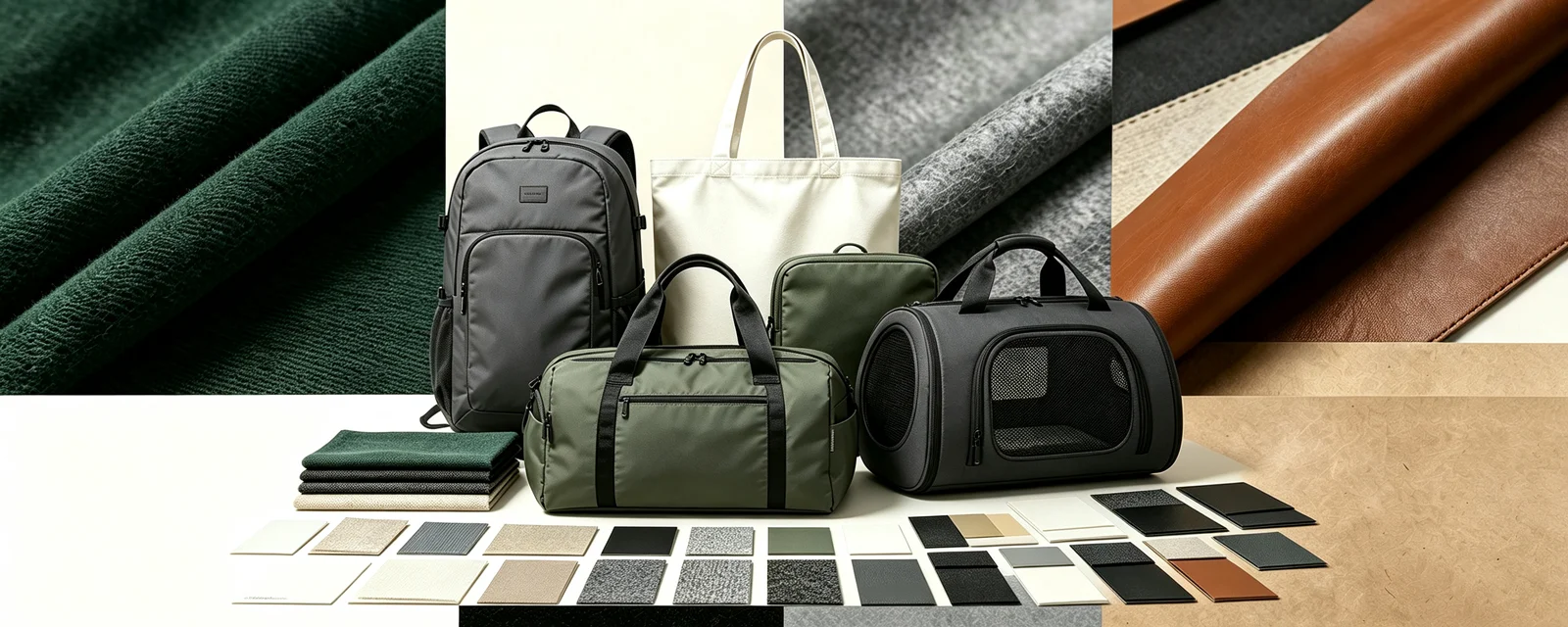
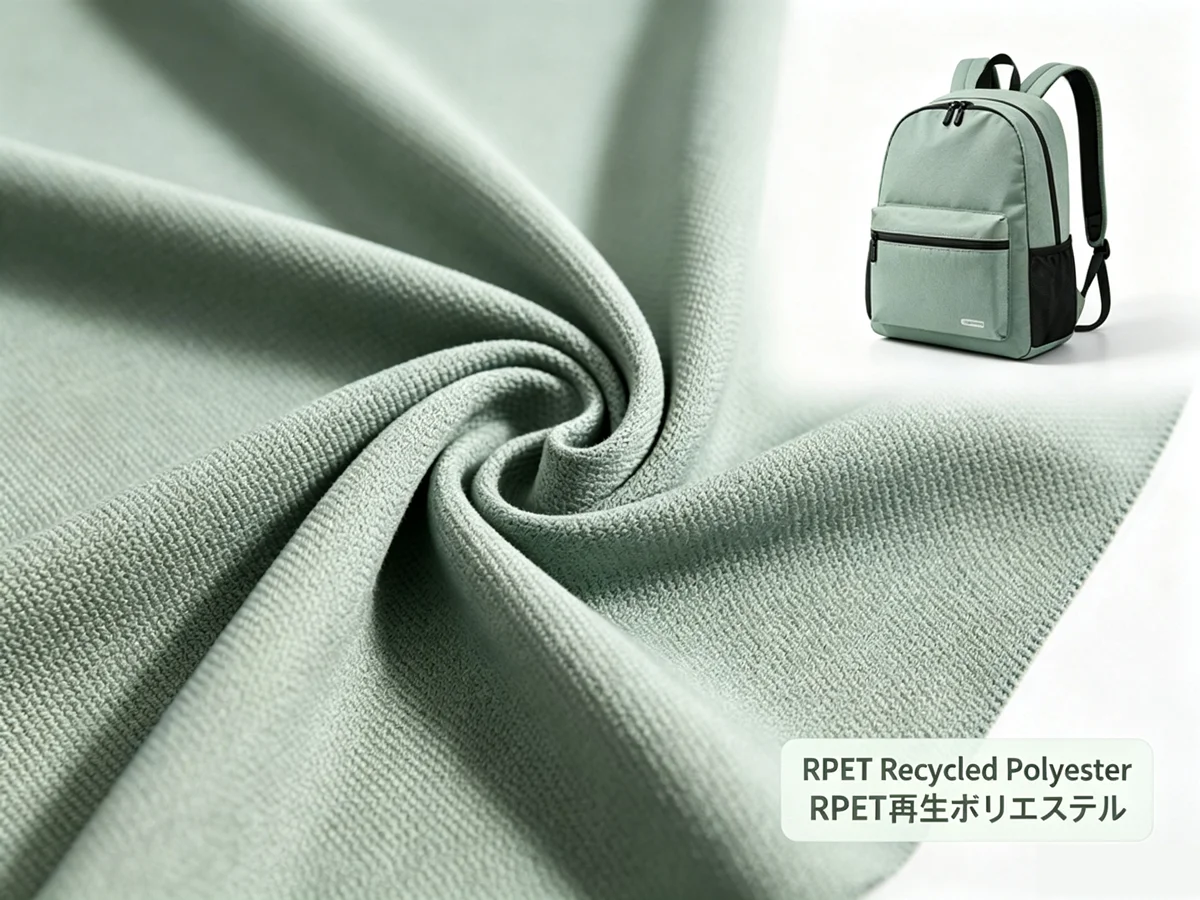
1.1 What is RPET Fabric?
RPET, commonly known as “eco-bottle fabric,” is a mature recycled polyester textile. It is produced from discarded PET beverage bottles through sorting, flaking, spinning, and weaving, turning plastic waste into a valuable resource and supporting a sustainable textile circular system.
1.2 Core Environmental Benefits & Performance
Strong energy saving and carbon reduction: Each ton of RPET yarn saves 6 tons of petroleum resources and reduces energy consumption by nearly 80% compared with conventional polyester production. One pound of RPET fabric saves 61,000 BTU of energy and cuts CO₂ emissions by 21 pounds (source: Textile Exchange, 2023), delivering outstanding low-carbon value.
Closed-loop recycling: The fabric can be recycled again, enabling a sustainable “plastic bottle → fabric → recycled raw material” loop that aligns with brand ESG goals.
International compliance: After eco-dyeing and professional coating, the product fully complies with EU REACH (Regulation EC No 1907/2006) and US CA Prop 65 standards. It passes third-party tests by SGS, Intertek, MTL, etc., with zero exceedance of formaldehyde, phthalates, heavy metals, and other hazardous substances.
1.3 Selection Considerations
Dyeing performance: Colour fastness in dark shades is slightly lower than that of virgin polyester. We recommend sampling and fastness verification before mass production.
Yarn quality variation: Strength may vary depending on the recovery source (post-consumer vs. post-industrial). Prefer traceable yarn suppliers certified under the GRS scheme.
Microplastic release: Like all synthetic fabrics, RPET may release microplastics during washing. Consider using washing filter bags or opting for solution-dyed processes to reduce shedding.
1.4 Suitable Applications & Recommended Solutions
RPET is abrasion-resistant, tough, and dimensionally stable, making it ideal for sports backpacks, outdoor bags, school bags, shopping totes, drawstring bags, and branded promotional gift bags. (Common industry solution: RPET polymer composite fabric with a recovery rate of up to 95%, suited for sports, outdoor lines, and large-volume promotional orders.)
II. Organic Cotton - Zero-Pollution, Pure Natural Premium Sustainable Fabric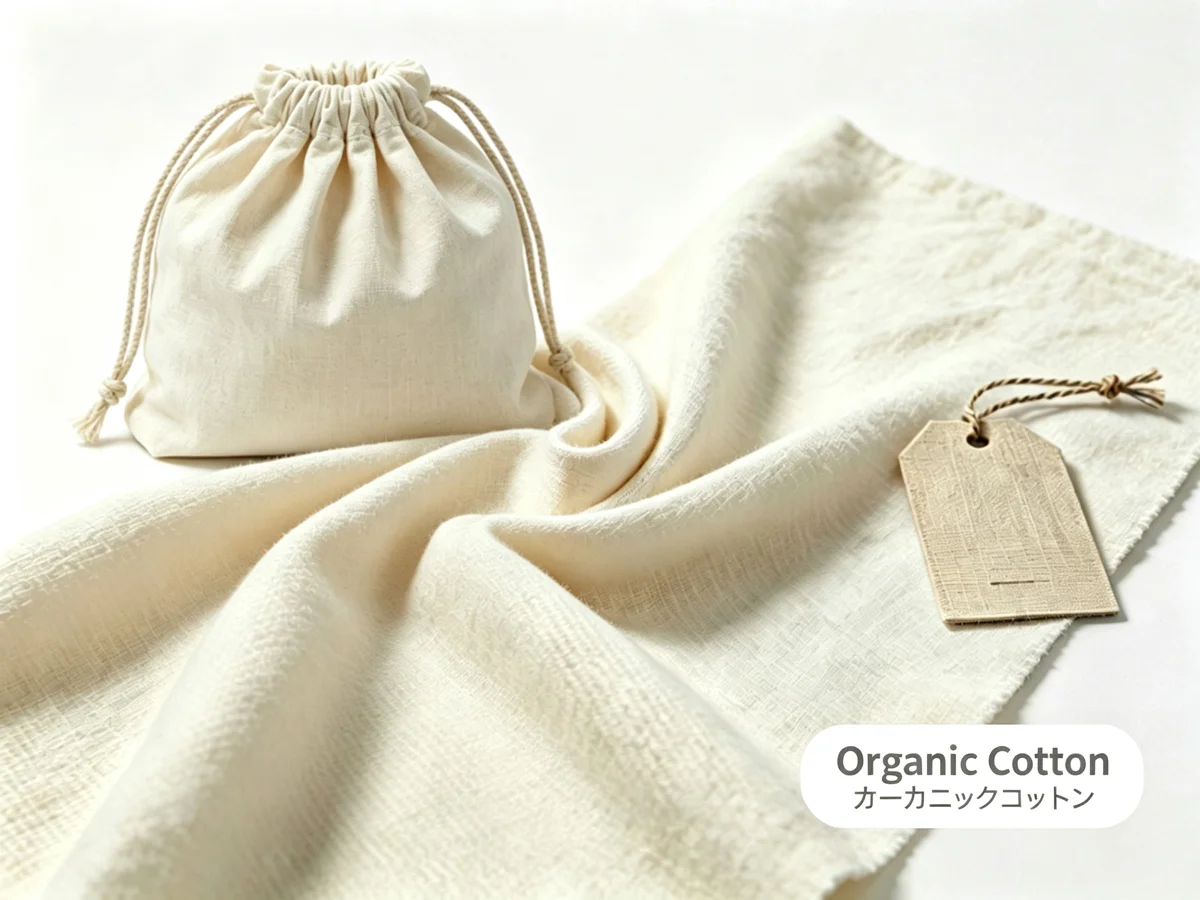
2.1 What is Organic Cotton?
Organic cotton is grown under certified organic practices without synthetic fertilizers, pesticides, or chemical growth regulators. Heavy metals and harmful residues are strictly controlled. It is certified by GOTS/OCS or equivalent, offering a safe, pure, natural, and high-end eco-fabric.
2.2 Core Environmental Benefits & Performance
Skin-friendly, safe, and non-irritating: No chemical residues throughout the entire production chain, zero skin irritation, suitable for sensitive individuals, and extremely safe to use.
Fully biodegradable: Completely decomposes in the natural environment, producing no microplastics or secondary pollution - aligning with the ultimate sustainability concept.
Breathable, comfortable, and premium feel: The natural fibre structure provides excellent breathability and moisture absorption, with a soft, delicate touch and a high-end aesthetic.
2.3 Selection Considerations (Limitations)
Lower durability: Tear strength and abrasion resistance are inferior to synthetic fabrics, not recommended for heavy-duty or frequent-use bag applications.
Shrinkage risk: Natural cotton has a typical shrinkage rate of 3-5%. Allow extra in the pattern or apply pre-shrinking treatment.
Cost premium: GOTS-certified organic cotton usually costs 1.5-2 times that of conventional cotton, more suitable for premium gifts, brand-image products, and projects with adequate budgets.
Dyeing constraints: Deep colours require low-impact dyes, and the colour gamut is more limited than that of conventional polyester.
2.4 Suitable Applications & Recommended Solutions
Organic cotton is naturally skin-friendly and refined, ideal for high-end totes, premium shopping bags, exclusive brand gift bags, and corporate high-quality welfare packs. Its zero chemical residue and full biodegradability make it perfect for brands that emphasize natural, healthy values.
II. Fully Biodegradable Fabric (PLA/PBAT) - Zero-Residue Eco-Material for Single-Use Scenarios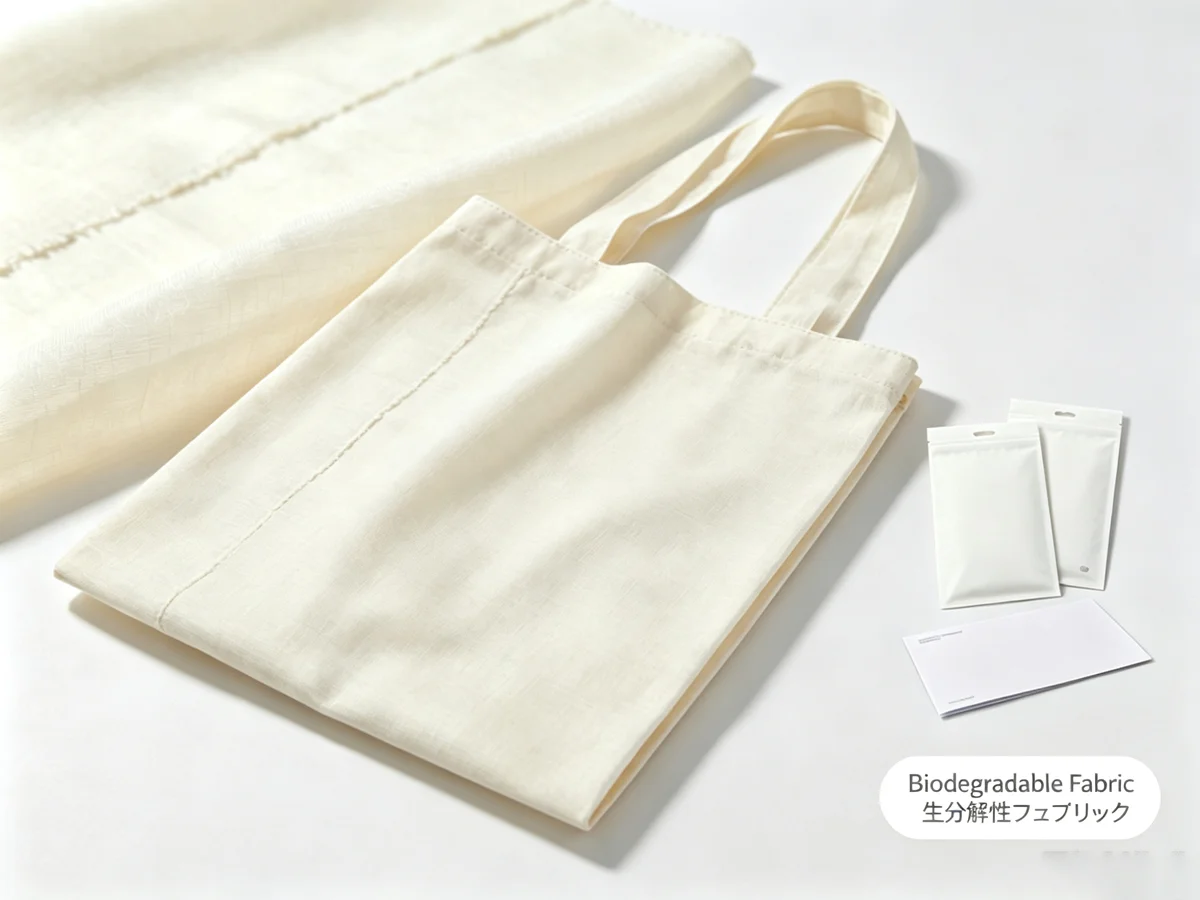
3.1 What is Biodegradable Fabric?
Biodegradable fabrics are mainly made from PLA (polylactic acid) and PBAT, derived from renewable biomass such as corn and straw. They replace traditional petroleum-based raw materials, are low-carbon and non-toxic, and can fully degrade - making them the preferred eco-material for disposable bag applications.
3.2 Core Environmental Benefits & Performance
100% compostable, zero residue: Under industrial composting conditions (≥58°C, 90% humidity), they completely decompose into CO₂, water, and organic fertiliser within 90-180 days, leaving no toxic or harmful substances.
Renewable feedstock: Sourced from agricultural renewable resources, not dependent on fossil fuels, ensuring sustainable supply at the raw material stage.
Food-grade safety: Passes US FDA certification, meeting food-contact safety requirements with guaranteed product safety.
3.3 Selection Considerations (Limitations)
Strict degradation conditions: Effective degradation only occurs in industrial composting facilities; in ordinary landfills or home composting, degradation is extremely slow or may not occur at all. Brands must ensure that end markets have the necessary industrial composting capacity (e.g., some EU countries already do).
Poor thermal stability: PLA typically withstands temperatures no higher than 50-60°C; it deforms or softens under high heat, not suitable for hot food or high-temperature transport.
Limited shelf life: Gradually hydrolyzes and ages in humid and hot environments. Store in cool, dry conditions; shelf life is usually 6-12 months.
Lower mechanical strength: Puncture and tear resistance are inferior to RPET, unsuitable for reusable bag products.
3.4 Suitable Applications & Recommended Solutions
Biodegradable fabric is suitable for eco-shopping bags, exhibition give-away bags, FMCG promotional packaging, agricultural produce packaging, and other single-use applications that achieve zero-waste disposal. (Common industry solution: PLA biomass fully biodegradable fabric + water-based eco-inks, complete with degradation certification and compliance test reports, tailored to FMCG, exhibition, and green agriculture brand needs.)
IV. Eco-Friendly Inks - Low-VOC Green Printing Solutions for Export Compliance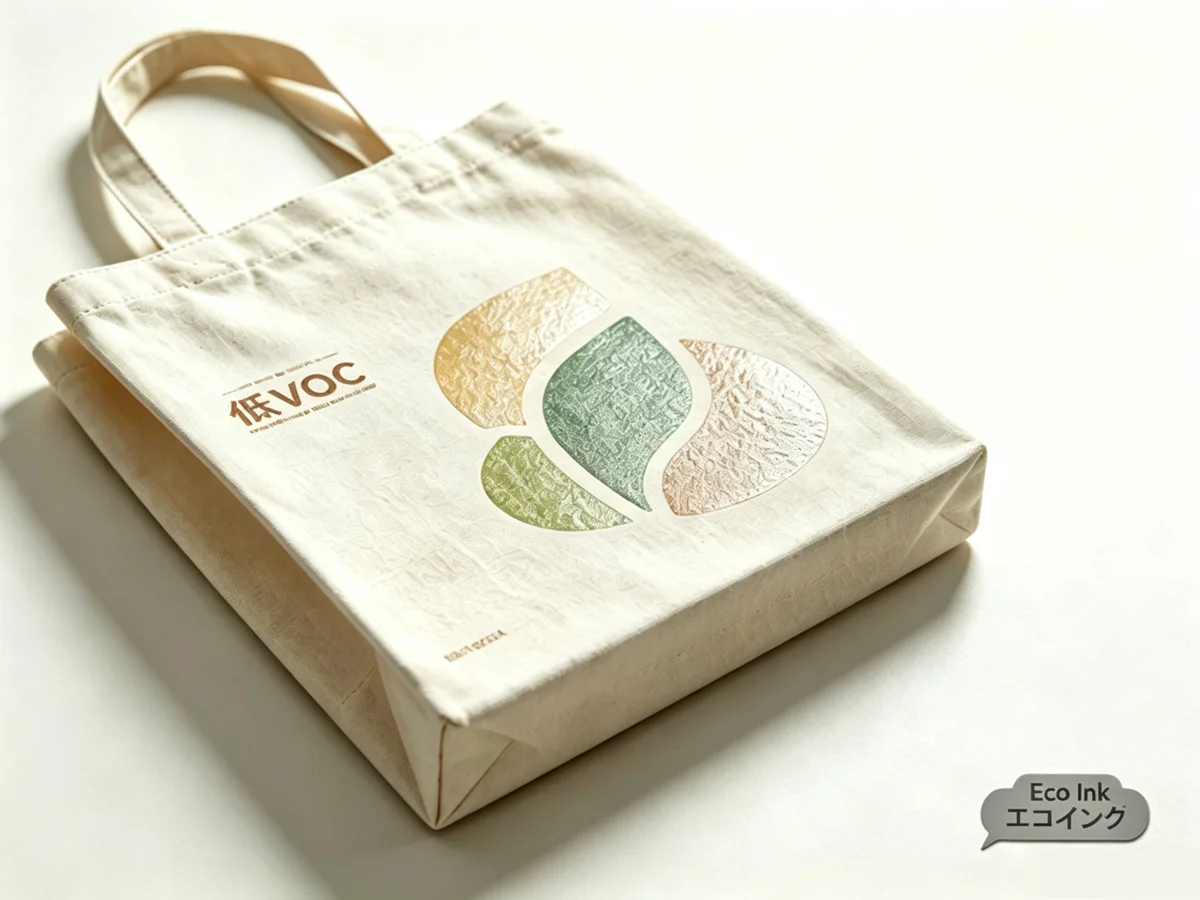
4.1 What are Eco-Friendly Inks?
Eco-friendly inks mainly include water-based inks and soy-based inks, eliminating the harmful chemicals of conventional solvent-based inks. Water-based inks use water as the solvent, with no volatile organic compounds; soy-based inks use food-grade raw materials, reducing pollution at source and meeting export green printing standards.
4.2 Core Environmental Benefits & Performance
Ultra-low VOC emissions: Contain virtually no VOCs; no hazardous gases are released during production or use, meeting strict EU/US VOC regulations (e.g., US CARB, EU Directive 2004/42/EC).
Food-grade safety certification: Some inks are FDA-tested and meet food-contact safety standards, posing no safety risks.
Strong adhesion and clear printing: Suitable for various bag substrates such as PET, OPP, and non-woven fabrics. Brand logos and patterns are printed with clarity, durability, and high-definition reproduction of brand visuals.
4.3 Selection Considerations (Limitations)
Longer drying time: Water-based inks dry slower than solvent-based ones; need hot-air drying or UV-curing equipment, requiring production line adjustments.
Substrate compatibility differences: Limited adhesion on hydrophobic substrates (e.g., PE, PP); pre-treatment like corona or primer coating is necessary.
Colour saturation: Some fluorescent and metallic colours may not match solvent-based inks; complex spot colours require pre-production sampling for colour confirmation.
4.4 Suitable Applications & Recommended Solutions
Applicable to all custom bags with brand logos and graphic printing. (Recommended export standard: consistently use eco-friendly inks to effectively avoid compliance risks such as VOC exceedance and chemical residue violations in EU, US, and Japanese markets.)
V. Silicone Leather - Ultra-Low-Carbon, Next-Generation Premium Eco-Leather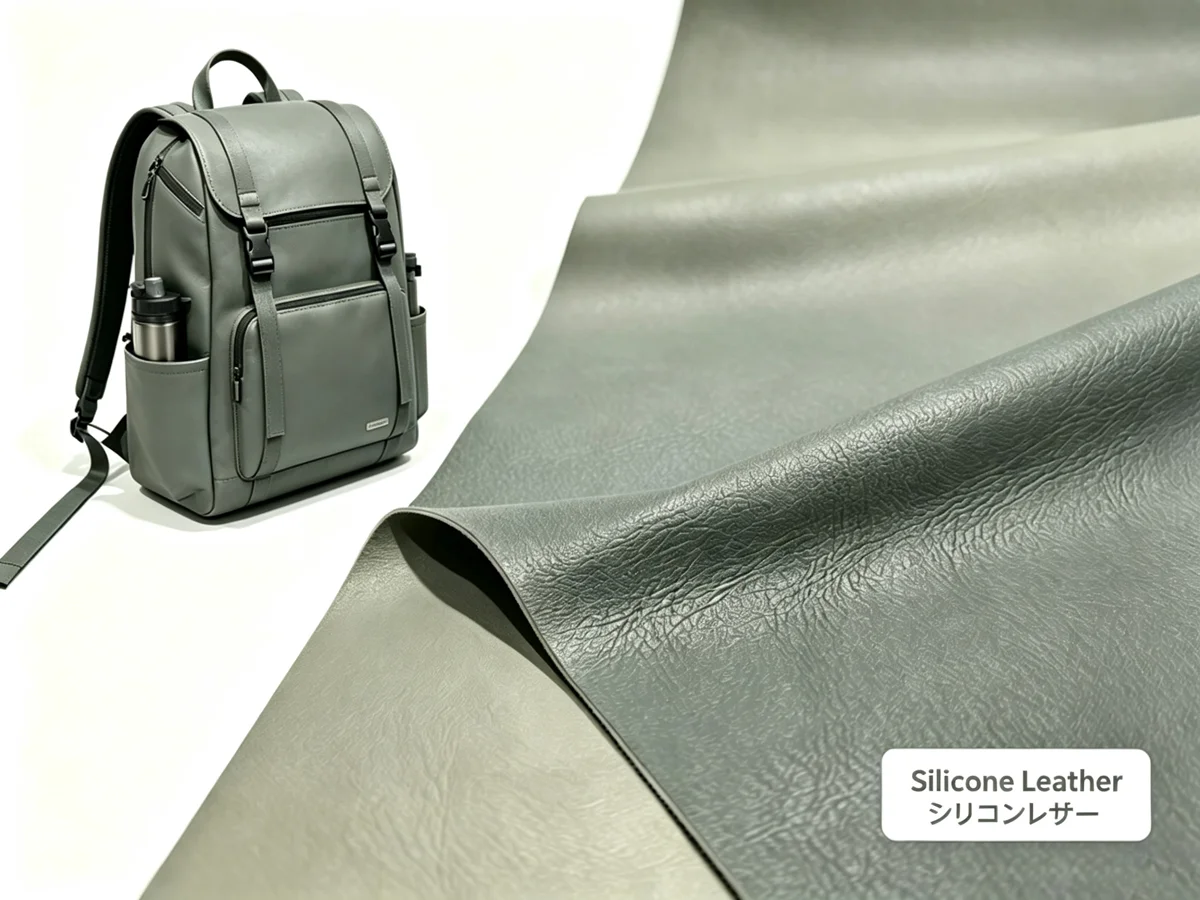
5.1 What is Silicone Leather?
Silicone leather is a new low-carbon eco-leather. Unlike petroleum-based PU or PVC leather, it uses silicone polymer refined from quartz sand as the core raw material, bonded onto recycled base fabric through a solvent-free process. Its production energy consumption and carbon footprint are far lower than those of traditional leather, offering outstanding environmental and performance advantages.
5.2 Core Environmental Benefits & Performance
Zero VOC, odourless: Entirely solvent-free production, zero VOC emissions; no odour or harmful volatiles even in enclosed or high-temperature environments - safe and eco-friendly.
Superior water- and stain-resistance, easy to clean: Surface anti-soiling grade reaches level 10; stubborn stains like coffee, soy sauce, ink, and ketchup can be wiped clean with water or alcohol, with extremely low maintenance costs.
Extreme durability and weather resistance: Passes 100,000 Martindale abrasion cycles without surface damage; remains soft and deformation-free from-40°C to 240°C; passes 10-week hydrolysis resistance at high temperature/humidity and 1,000-hour salt spray tests - suitable for challenging outdoor environments.
Antibacterial, skin-friendly, safe and non-toxic: Naturally mould- and bacteria-resistant, contains no DMF, plasticisers, or other harmful substances; feels smooth and soft, safe for skin contact.
Inherent flame retardancy: No added flame retardants needed; achieves high-level flame resistance (up to UL94 V-0) and releases no toxic gases when burned, offering enhanced safety.
5.3 Selection Considerations (Limitations)
Higher cost: Silicone leather typically costs 2-3 times that of high-end PU leather, better suited for premium product lines that prioritise long-term use, safety, and sustainability - not for fast-moving or low-cost promotional items.
Processing expertise required: Requires specialised high-frequency welding or sewing techniques; ordinary bag factories may lack the necessary equipment and technical know-how.
Limited surface texture options: Currently, embossing patterns are more limited compared to PU leather; special textures require advance confirmation of mould schedules with suppliers.
Recycling pathway: Although eco-friendly, silicone itself is not biodegradable. After disposal, it must be processed through dedicated silicone recycling channels - it is not universally recyclable.
5.4 Suitable Applications & Recommended Solutions
Silicone leather combines eco-friendliness, premium feel, and durability, making it ideal for high-end handbags, outdoor backpacks, pet travel carriers, and premium gift bags. (Common industry solution: solvent-free eco-silicone leather paired with food-grade safety linings, tailored to high-end brands requiring long-lasting, safe, and sustainable products.)
VI. How to Verify Your Eco-Bag Supplier’s Compliance Qualifications?Beyond material selection, supplier qualification verification is a critical step to mitigate export risks. We recommend that brands conduct due diligence on suppliers across the following dimensions:
Verification Dimension | Check Points | Reference Standards / Documents |
|---|---|---|
Material certificates | Valid GRS, GOTS, RCS, or other global recycling/organic certificates; certificate numbers verifiable on certifier’s website | Textile Exchange certification database |
Chemical compliance reports | Provision of REACH SVHC test reports (typically ≤0.1%) and CA Prop 65 test reports | Third-party reports from SGS, Intertek, etc. |
Factory system certifications | ISO 14001 (Environmental Management) and ISO 9001 (Quality Management) certifications | IAF CertSearch global database |
Degradation documentation | If using PLA or other biodegradable materials, provide OK Compost, BPI, or EN 13432 certification under industrial composting conditions | Verifiable on certifier’s website |
Traceability system | Ability to provide full-chain traceability records from raw material procurement → production → shipment | Internal traceability system and third-party audit reports |
Brands should request copies of the above documents before cooperation and verify their validity and scope to ensure they cover the specific product categories.
VII. Quick Material Selection Reference Table for Eco-Friendly BagsMaterial | Core Advantages | Key Limitations | Recommended Applications |
|---|---|---|---|
RPET | Energy-saving, carbon-reducing, abrasion-resistant, durable, closed-loop recyclable | Lower colour fastness in dark shades; releases microplastics during washing | Sports backpacks, outdoor gear, large-volume brand promotional gift bags |
Organic Cotton | Naturally skin-friendly, fully biodegradable, zero chemical residues | Lower durability, shrinkage risk, higher cost (1.5-2× premium) | Premium brand gift bags, boutique retail packaging, brand-image exclusive products |
Biodegradable PLA/PBAT | Fully compostable industrially, renewable feedstock | Requires industrial composting, heat resistance ≤50°C, limited shelf life | FMCG promotional bags, exhibition give-aways, single-use packaging bags |
Eco-Inks | Ultra-low VOC, food-grade safety, clear printing | Slower drying, limited adhesion on hydrophobic substrates, constrained special colour performance | All custom bags with brand logos and graphic prints |
Silicone Leather | Zero VOC, waterproof/stain-resistant, ultra-durable (100k abrasion cycles), premium feel | Higher cost (2-3× PU), processing expertise required, non-biodegradable | High-end handbags, outdoor sports bags, pet travel bags, daily bags requiring frequent cleaning |
Q1: What are the actual performance differences between RPET and virgin polyester?
A: RPET has comparable tensile and tear strength to virgin polyester, but the colour fastness to washing for dark shades is usually 0.5-1 grade lower (ISO standard). For dark-coloured products, we recommend using solution-dyed yarns or adding an after-treatment fixing process.
Q2: Can PLA biodegradable bags really “fully degrade”? What conditions are needed?
A: PLA degrades completely within 90-180 days under industrial composting conditions (temperature ≥58°C, humidity ≥90%, aerobic environment). However, in ordinary soil, water, or home composting, degradation may take several years. Brands using PLA must clearly label “requires industrial composting” on the packaging to avoid “greenwashing” claims in North American or European markets.
Q3: Is silicone leather a bio-based material? Is it recyclable?
A: Silicone is made from quartz sand (silica) and is an inorganic mineralbased polymer - it is not bio-based. After disposal, it can be chemically cracked or energy-recovered through dedicated silicone recycling channels, but it is not soil-biodegradable. Brands should avoid equating it with PLA as a “biodegradable” material in their marketing.
Q4: What are the main differences between CA Prop 65 and REACH?
A: CA Prop 65 (California Proposition 65) regulates over 1,000 known carcinogens or reproductive toxicants, requires warning labels, and uses the “No Significant Risk Level” (NSRL) standard. REACH regulates 253 SVHC substances (as of February 2026 update) and sets a “maximum allowed concentration” (typically 0.1%). Exports to California require close attention to Prop 65 list updates (twice yearly); exports to the EU require monitoring of SVHC candidate list updates (twice yearly).
Q5: What is the difference between GRS and RCS certification?
A: GRS (Global Recycled Standard) requires a minimum recycled content of ≥20% and covers audits on social responsibility, environmental management, and chemical restrictions. RCS (Recycled Claim Standard) only traces recycled content (≥5%) and does not include social or environmental audits. For EU exports, we recommend prioritising GRS-certified materials, as they are more widely accepted by international brands.
IX. Data Traceability & Qualification Verification AnchorsThe material performance and compliance conclusions in this paper are based on historical export project data from Guangzhou Fuliya Industry Co., Ltd. and the current standards of the following certification systems:
Certification | Certificate / Report No. | Issuing Body | Verification Path | Applicable Scenarios |
|---|---|---|---|---|
ISO 14001:2015 Environmental Management | ISO14001:2015 | URS | Verify via IAF CertSearch global database (iafcertsearch.org) by entering company name or certificate number | Demonstrates systematic environmental management - a basic entry requirement for OEM cooperation with major European/US brands |
amfori BSCI Social Audit | 25-0310781 | amfori | Audit report accessible through amfori Sustainability Platform (platform.amfori.org) by authorised partners | Meets European retail alliance requirements for labour rights and working conditions - suitable for EU market access |
Higg FEM Environmental Module | 179782 | Cascale (formerly SAC) | Factory FEM data accessible via Higg Index platform on Cascale website by authorised verifiers | Factory environmental performance tool specified by global outdoor/sports brands (e.g., The North Face, Patagonia) |
Disney ILS Social Audit | A5292765 | Intertek | Audit report accessible through Disney ILS system by authorised brand users | Mandatory for Disney-licensed product suppliers - suitable for bag projects with Disney IP elements |
Intertek SQP Supplier Qualification | F_IAR_209193_SQP | Intertek | Certification status accessible via Intertek supplier portal by authorised brand partners | Widely accepted supplier qualification for US/EU retailers (e.g., Walmart, Target) - covers quality systems, production processes, and social responsibility |
Note: Some certifications require platform-based authorised verification (amfori BSCI, Disney ILS, Higg FEM, Intertek SQP). Original reports and complete data must be accessed by authorised partners through the respective platforms, or you may provide your partners with stamped copies of the reports. ISO 14001 certificates can be independently verified through the IAF CertSearch public database.
Closing RemarksCompliant and sustainable bag customization is a lifecycle green design covering raw material traceability, production processes, user experience, and end-of-life treatment. There is no single “universal” eco-fabric - RPET suits durable applications but releases microplastics during washing; organic cotton is skin-friendly but limited in strength; PLA is biodegradable but requires specific facilities; silicone leather offers high performance but at a higher cost. Material selection is essentially a precise trade-off between performance, cost, compliance, and sustainability goals.
Faced with increasingly stringent ESG and environmental regulations in the EU, US, and Japan (e.g., EU ESPR - Regulation (EU) 2024/1781, effective July 2024; Japan’s Act on Promoting Plastic Resource Circulation, etc.), accurate material selection, third-party certified traceability, and a complete set of compliance documentation are key to successful product market access.
Guangzhou Fuliya Industry Co., Ltd. specializes in high-standard eco-bag OEM/ODM customization for EU, US, and Japanese markets. Leveraging the GRS/GOTS-certified production systems, full-chain traceability, and comprehensive overseas compliance support services mentioned above, we provide global brands with one-stop sustainable bag customization solutions.
For project-specific material selection advice or a compliance document checklist, please feel free to contact our technical team through our official website.
This document will be reviewed and updated quarterly in line with the phased implementation schedule of the EU ESPR (Digital Product Passport requirements for certain categories are expected from 2027) and updates to the REACH SVHC list.
Document Version: August 2026
Prepared by: Guangzhou Fuliya Industry Co., Ltd.
Scope of Application: Reference for eco-bag material selection in EU, US, and Japanese markets for OEM/ODM customization